
Table of Contents
Alcohol Abuse Recovery and Life Skills Coaching in Bangalore
People researching alcohol abuse treatment often discover that lasting recovery involves more than clinical care. At Edge Recovery Life Skills, addiction recovery coaching in Bangalore provides accountability through regular sessions, goal-setting, and honest, non-judgmental check-ins for individuals in recovery.
Coaching develops practical daily routines, stress management, trigger recognition, emotional regulation, refusal and communication skills, and healthy habits. Clients also co-create a personal alcohol relapse prevention plan that identifies high-risk situations, coping strategies, support contacts, and daily structure. These skills help people build sobriety-supporting routines.
In-person coaching serves the Bangalore 560038 area and helps clients strengthen local support networks. Results may vary based on individual circumstances, and coaching is not a substitute for professional medical advice. If you are in crisis or at immediate risk, call emergency services or a national crisis helpline. Recovery coaching can become a springboard for comprehensive personal development.
Setting the Foundation for Alcohol Abuse Recovery and Life Skills
Beginning alcohol abuse treatment is a significant first step, but lasting recovery depends on more than simply stopping drinking. True change involves building daily structure, coping mechanisms, and emotional awareness. Recovery is not a single event; it is an ongoing skill-building journey rooted in personal commitment and practical habits. Seeking help takes courage, and every small step forward matters.
Developing an alcohol relapse prevention plan is essential for staying on track. This plan helps identify personal triggers, high-risk situations, and healthy replacement routines. Core life skills–such as stress management, routine building, emotional regulation, and communication–create the structure that sustains long-term recovery. For example, a consistent exercise routine can replace the habit of evening drinking, and better communication skills help rebuild relationships affected by alcohol use.
Addiction recovery coaching can support this process by guiding you in crafting a personalized relapse prevention plan. For people pursuing alcohol abuse treatment in Bangalore, recovery coaching that understands local family dynamics can be a valuable resource. However, coaching and life-skills guidance are not a substitute for professional medical advice or treatment, and results vary based on individual circumstances. Once this foundation is in place, the next step is exploring which life skills matter most and how to build them.
Recognizing Emotional Triggers and High-Risk Social Situations
Beyond understanding the causes, recognizing emotional and social cues in daily life is equally important for anyone considering alcohol abuse treatment. Stress, anxiety, loneliness, anger, boredom, and exhaustion are common internal triggers–yet they are deeply personal and vary from person to person. Learning to notice these feelings without judgment can help you pause before you act.
In the Indian context, weddings, festivals, family gatherings, and work parties often normalize drinking, creating high-risk situations. A heated argument may stir resentment, while social anxiety before a celebration can test your resolve. Pausing to recognize these emotional cues is a key part of an alcohol relapse prevention plan, helping you stay sober even in challenging environments.
Recognizing a trigger is only the first step; the next section explores how to respond to these situations. When you need structured support, addiction recovery coaching from ēdge Recovery Life Skills can guide you in building practical coping strategies–without promising specific outcomes. This information is educational and not a substitute for professional medical advice; if you are in crisis, call a national helpline.
Building a Structured Daily Routine to Prevent Alcohol Relapse
Establishing a structured daily routine is a practical element of an alcohol relapse prevention plan. Predictable patterns can reduce idle time and help individuals in alcohol abuse treatment maintain focus and stability. An effective alcohol relapse prevention plan often starts with a consistent wake-up time and morning ritual to anchor the day.
Planning activities in advance–including structured meals, work, dedicated time for physical activity, and recovery-focused tasks like journaling or attending peer support–helps avoid spontaneous high-risk situations. Evening hours can pose challenges, so scheduling a wind-down routine such as reading, mindfulness, or light stretching before a consistent bedtime supports healthy sleep cycles. Adding simple stress-management practices like deep breathing or mindfulness during transitions between activities can further support emotional balance.
For additional accountability, addiction recovery coaching provides personalized guidance. This content is informational and not a substitute for professional medical advice; results vary by individual. If you are in crisis, call emergency services or a national helpline.
Using Grounding Techniques to Manage Alcohol Cravings
When a craving hits, grounding techniques help you stay in the moment — an important coping skill that supports alcohol abuse treatment rather than replacing it. Grounding redirects your attention to your immediate surroundings using your five senses, giving your mind a focal point while the craving rises and falls.
The 5-4-3-2-1 Exercise
- Name 5 things you can see around you
- Name 4 things you can physically feel
- Name 3 things you can hear right now
- Name 2 things you can smell
- Name 1 thing you can taste
As an alternative, try holding an ice cube in your palm or splashing cold water on your wrists for about a minute. The physical sensation can shift your attention quickly when a craving feels overwhelming. Grounding does not erase the craving, but it can help you ride it out while it peaks and begins to fade.
These sensory grounding skills work best alongside a structured alcohol relapse prevention plan and professional support such as addiction recovery coaching in Bangalore. This content is educational and not a substitute for professional medical advice.
Creating Your Personalized Alcohol Relapse Prevention Plan
Once you recognize early warning signs, the next step is creating a personalized alcohol relapse prevention plan–a tool that builds on your alcohol abuse treatment and fits your life in Bangalore.
- Personal triggers: people, emotions, festivals, family pressure, commute stress, late-working culture.
- High-risk situations: weddings, work parties, social gatherings where alcohol is present.
- Coping responses: 2-3 pre-planned actions (call a friend, leave the situation, practice deep breathing).
- Support contacts: trusted friends, family, recovery coach.
- Daily routine: structured schedule with exercise, meals, sleep.
- If you slip: a setback doesn’t erase progress; revisit your plan and contact your support network immediately.
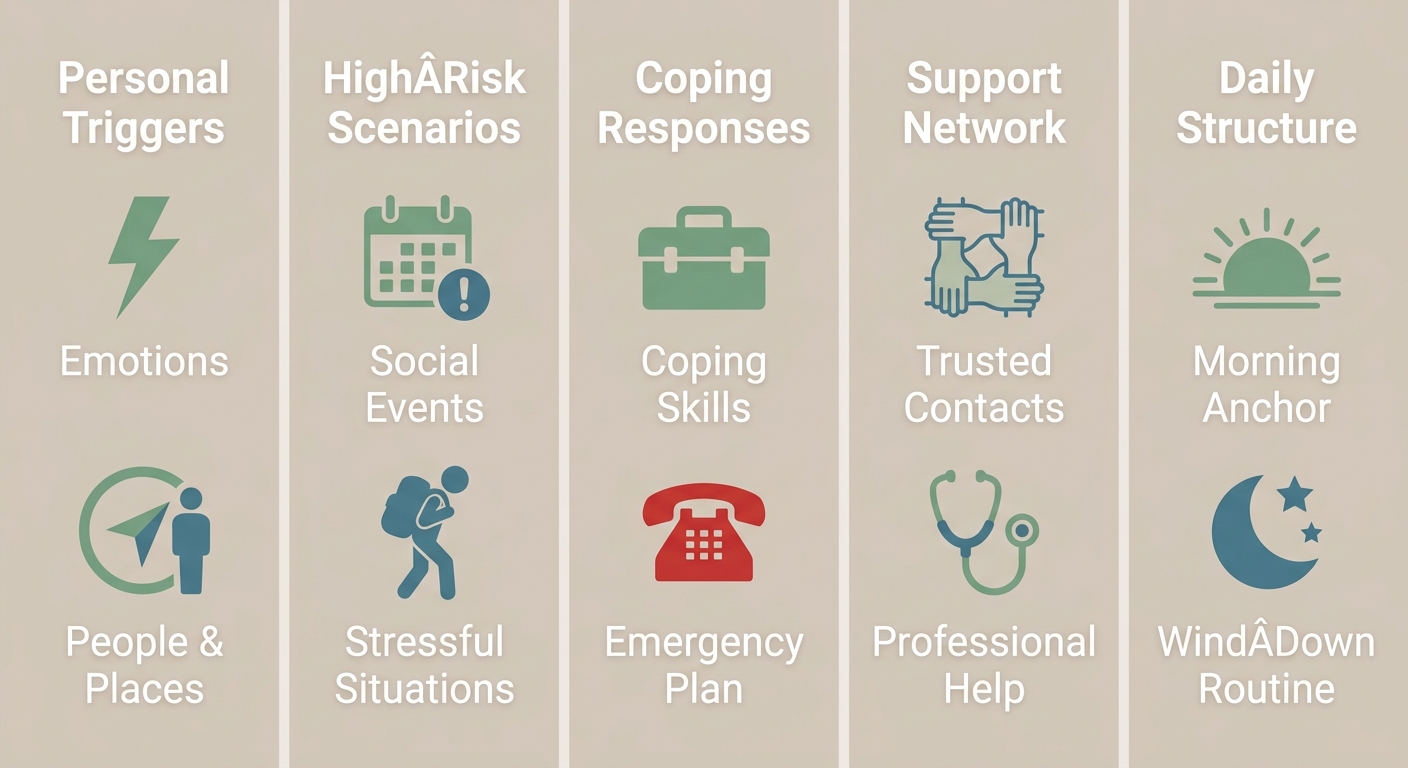
Regularly updating your plan with a coach’s guidance keeps it relevant. Addiction recovery coaching provides accountability and plan reviews, but it does not replace medical advice or therapy.
This information is not a substitute for professional medical advice; consult a qualified healthcare provider for diagnosis and treatment. If you are in crisis, call emergency services or a national crisis helpline immediately.
Strengthening Communication and Engaging Family Support
Open and honest communication plays a vital role during alcohol abuse treatment, helping families build trust and reduce shame. When a loved one begins recovery, family members often wonder how to talk about difficult topics without creating conflict.
Using ‘I’ statements like “I feel concerned when you miss group sessions” invites dialogue without blame. Active listening–giving your full attention, reflecting what you hear, and resisting the urge to interrupt–strengthens connection. Families can help a loved one stay consistent with daily routines and scheduled recovery activities, offering practical encouragement. Healthy boundaries, such as refusing to cover up missed appointments, support an alcohol relapse prevention plan by reinforcing accountability.
Encouraging a loved one to attend addiction recovery coaching sessions and stick to daily routines complements professional care. Family involvement supports the journey, but it never replaces clinical support. This information is not a substitute for professional medical advice; consult a qualified healthcare provider for diagnosis and treatment. Results may vary based on individual circumstances.
Exploring Professional Addiction Recovery Coaching in India
Professional addiction recovery coaching is a non-clinical, action-oriented support service that complements alcohol abuse treatment. Recovery coaches help individuals create an alcohol relapse prevention plan tailored to their lifestyle, establish daily routines, and maintain accountability through regular check-ins. They also guide family members, strengthening the support system during the post-treatment phase.
In Bangalore, sober coaching programmes combine evidence-informed techniques with hands-on practice to bridge the gap between treatment centre discharge and independent daily living. Across India, recovery coaches work alongside licensed medical teams without replacing their clinical role. A typical engagement may involve setting weekly goals, practising coping strategies for high-risk situations, and monitoring progress toward personal recovery milestones. This collaborative approach helps participants translate therapeutic gains into sustainable behaviour changes.
Individual outcomes vary, and coaching is not a substitute for medical treatment. If you are in crisis or at immediate risk, call emergency services or a national crisis/overdose helpline.
Achieving Employment Readiness and Community Reintegration in Bangalore
Rebuilding a career and social connections is a vital part of lasting recovery after alcohol abuse treatment and beyond. Employment readiness coaching in Bangalore provides practical job-readiness skill-building, including resume and CV preparation, mock interview practice, and professional communication training designed to help individuals re-enter the workforce with confidence. Coaching sessions also cover workplace etiquette and navigate the nuances of the city’s competitive job market.
Community reintegration focuses on strengthening family relationships, building healthy, sober social networks, and connecting individuals with peer support groups and volunteer opportunities across Bangalore. These connections create a supportive safety net that reinforces sober living and personal accountability.
Addiction recovery coaching in Bangalore incorporates this life-skills development to complement–not replace–clinical care. Results may vary based on individual circumstances. This information is not a substitute for professional medical advice.
Overcoming Common Obstacles in Alcohol Recovery and Life Skills Practice
Beyond learning core life skills, individuals in recovery often face obstacles that challenge their progress. Engaging in alcohol abuse treatment in Bangalore equips people with strategies to navigate cravings, social pressure, and emotional distress — common hurdles that require consistent practice.
The recovery journey presents several predictable challenges, each of which can be met with a targeted life skill:
- Cravings and trigger situations: trigger identification and avoidance planning
- Social pressure in drinking environments: refusal skills and assertive communication
- Stress and negative emotions: stress-management techniques such as breathwork or journaling
- Disruption of daily routine: structured daily scheduling
- Overconfidence after a stretch of sobriety: ongoing self-monitoring and honest accountability
Building an alcohol relapse prevention plan with a coach can help anticipate personal triggers and craft actionable responses. Ongoing addiction recovery coaching provides non-judgmental encouragement and a structured framework for skill reinforcement, complementing the work begun in alcohol abuse treatment in Bangalore. Coaches act as accountability partners, not medical professionals, helping clients translate therapeutic goals into daily routines.
For those ready to build these skills with guidance, recovery coaching offers a supportive path forward. Results may vary based on individual circumstances. This information is not a substitute for professional medical advice; consult a qualified healthcare provider for diagnosis and treatment. If you are in crisis or at immediate risk, call emergency services or a national crisis helpline.
Sustaining Your Recovery Journey with Life Skills and Support
Alcohol abuse treatment provides the necessary foundation, yet sustaining recovery day after day depends on practical life skills and a strong support network.
After completing alcohol abuse treatment, many people create a personalized alcohol relapse prevention plan that identifies personal high-risk situations, early warning signs, specific coping actions, and emergency contacts. Building routines around stress management, trigger identification, and refusal-skills practice reinforces stability and confidence. Over time, these skills help you respond thoughtfully instead of reacting impulsively to cravings or stress.
Addiction recovery coaching gives you a consistent accountability partner who helps set realistic goals, rebuild daily routines, and navigate setbacks without judgment. Coaches use evidence-informed techniques to translate recovery goals into everyday habits. Providers such as ēdge Recovery Life Skills in Bangalore offer both in-person and remote coaching sessions. They also connect you to peer support groups in Bangalore and recovery resources across India, ensuring you never face challenges alone.
Disclaimer: Results vary based on individual circumstances; this information is not a substitute for professional medical advice; if you are in crisis or at immediate risk, call emergency services or a national crisis/overdose helpline.