
Table of Contents
A key component of sustainable recovery involves not just the individual but the entire family. This is where a family recovery and life skills program comes into play. According to the Substance Abuse and Mental Health Services Administration (SAMHSA), a U.S. government authority on recovery frameworks, family recovery is a holistic process that strengthens mutual support and communication between individuals and their loved ones.
Life skills programs teach practical skills such as communication, coping strategies, problem-solving, and emotional regulation. Recovery-focused life skills training often includes comprehensive personal development, helping participants build routines that support well-being and practical daily functioning. Participation does not guarantee specific outcomes, and results vary based on individual circumstances.
Families in Bangalore, Karnataka, can access these programs through centers like Edge Life Skills, which tailor family-centered recovery programs to local needs. Understanding these programs helps families in Bangalore make informed choices about the support available to them.
The Role of Family Recovery Programs in Sustained Recovery
Building on the foundation of individual treatment, a family recovery & life skills program plays a crucial role in supporting sustained recovery. These structured interventions educate and empower family members, creating a healthier home environment that reinforces clinical care. By providing knowledge about addiction as a chronic disease, these programs help families become active participants in the healing process.
Family recovery programs address the relational dynamics that often accompany substance use disorders, such as codependency, communication breakdowns, and eroded trust. Through guided therapy sessions and educational workshops, family members learn to recognize enabling behaviors and develop healthier ways to support their loved one’s recovery. These programs help rebuild healthy interactions that are essential for a stable home environment. According to the American Society of Addiction Medicine (ASAM), research shows that family participation is associated with improved treatment engagement and may help reduce the likelihood of relapse. ASAM defines recovery as a process of sustained change, and family involvement is considered a key component in achieving that change.
These programs are not a substitute for individual treatment; rather, they are an integral component of a comprehensive recovery plan. A family recovery & life skills program typically includes:
- Educational sessions on addiction as a chronic disease.
- Counseling to improve communication and conflict resolution among family members.
- Skills training for setting healthy boundaries and managing stress.
- Relapse prevention planning that involves the entire support network.
Family recovery programs are particularly beneficial for individuals undergoing alcohol abuse treatment, as they help create a supportive home environment that reinforces clinical care. By equipping families with practical tools, these programs strengthen the recovery ecosystem and support long-term wellness.
In summary, family recovery programs offer a crucial support network that, when combined with individual treatment, may strengthen long-term recovery. They equip families with the tools to navigate recovery’s challenges, fostering an environment conducive to lasting change. Results may vary based on individual circumstances, and this information is not a substitute for professional medical advice; consult a qualified healthcare provider for diagnosis and treatment.
Essential Life Skills for Recovery: Coping, Routines, and Communication
Beyond medical and therapeutic support, developing everyday life skills is essential for sustained recovery. A comprehensive family recovery & life skills program helps individuals and families build the practical tools needed to navigate daily challenges. According to the National Association of Addiction Treatment Providers (NAATP), integrating life skills training into recovery care strengthens long-term success.
Coping Strategies
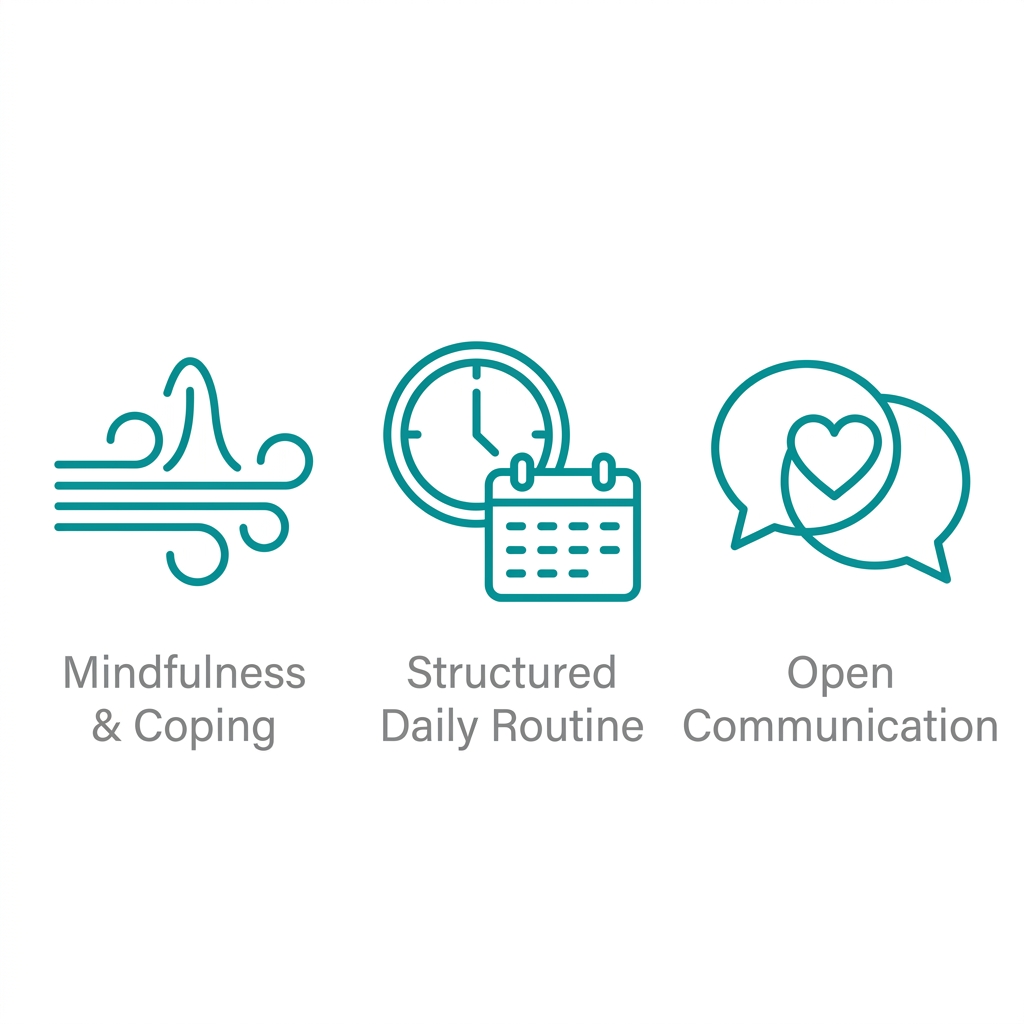
Learning to manage cravings and emotional triggers is a cornerstone of recovery. Practicing mindfulness keeps you grounded in the present moment, while deep breathing exercises calm the nervous system during stressful situations. Journaling offers a safe outlet to process thoughts and feelings, reducing the urge to turn to substances. Over time, these coping tools, practiced consistently, help you regain a sense of control and resilience. A recovery life skills program provides structured guidance to help you build these habits.
Daily Routines
A structured daily routine provides stability and reduces unpredictability, which can undermine recovery. Consistent sleep and wake times, balanced meal planning, and regular physical activity create a foundation of physical wellness. Scheduling therapy sessions, support group meetings, or coaching appointments ensures you stay connected to your recovery network. Over time, these habits become automatic, reinforcing a healthy, substance-free lifestyle. This predictability reduces anxiety and makes it easier to resist impulse-driven decisions. These routines also create space for self-care and reflection.
Communication Skills
Open and honest communication strengthens relationships and supports long-term recovery. In a family recovery & life skills program, you learn to use “I” statements to express feelings without blame, and practice active listening to truly understand your loved ones. These techniques rebuild trust and create a safe environment where everyone can share concerns and celebrate progress. When each person feels heard, the family unit becomes a source of strength rather than stress, reducing conflict and deepening mutual support.
With these skills in place, families are better prepared to navigate the next phase of the recovery journey. Progress looks different for everyone, and each small victory builds a stronger foundation for the future.
Results may vary based on individual circumstances. This information is not a substitute for professional medical advice; consult a qualified healthcare provider for diagnosis and treatment. If you are in crisis or at immediate risk, call emergency services or a national crisis/overdose helpline.
Evidence-Informed Techniques and Hands-On Practice in Bangalore, Karnataka
At ēdge Recovery Life Skills, our family recovery and life skills program in Bangalore integrates evidence-informed techniques grounded in standards set by NAADAC, the Association for Addiction Professionals. By combining research-backed methods with supervised practice, we help clients across Karnataka build the skills necessary for sustained recovery and healthier family relationships.
Two core approaches–motivational interviewing and cognitive-behavioral techniques–form the backbone of our training, as recommended by the National Association for Alcoholism and Drug Abuse Counselors. Research suggests that motivational interviewing strengthens a person’s intrinsic motivation for change, while cognitive-behavioral strategies target unhelpful thought and behavior patterns. We adapt these methods to Bangalore’s cultural context by involving extended family members as collaborative partners, reflecting the collectivist dynamics common in Karnataka households, and by delivering sessions in both Kannada and English to ensure clarity and comfort.
Practical, hands-on application distinguishes our approach. Trainees participate in:
- Role-play scenarios that mirror real-life crises families encounter in Bangalore, from communication breakdowns to relapse triggers.
- Supervised counseling sessions where certified coaches provide immediate, structured feedback.
- Case study analysis drawn from anonymized local situations, encouraging culturally sensitive problem-solving.
- Continuous feedback loops that refine skills and build confidence without overpromising outcomes.
Our comprehensive familycodependency training integrates these evidence-informed techniques through supervised practice sessions, enabling participants to translate therapeutic principles into everyday habits.
By grounding every exercise in current professional guidelines and clinical research, ēdge Recovery Life Skills ensures that family recovery and life skills training remains both practical and accountable. This combination of research-backed methods and hands-on learning equips individuals and families in Bangalore with real-world tools and resilience for navigating recovery.
Please note that results may vary based on individual circumstances. This information is not a substitute for professional medical advice; consult a qualified healthcare provider for diagnosis and treatment. If you are in crisis or at immediate risk, call emergency services or a national crisis/overdose helpline.
How Family Life Skills Programs Complement Clinical Treatment in Bangalore
This is where family life skills programs play a vital role. In Bangalore, a family recovery and life skills program – such as the structured sessions offered by ēdge Recovery Life Skills – works alongside clinical treatment to create a more complete recovery pathway. Clinical interventions stabilise conditions like depression, anxiety, and substance use disorders through therapy and medication, while these family-centred life skills programs translate therapeutic gains into everyday habits. This complementary relationship is not a replacement for medical care but an enhancement that bridges the gap between clinical support and daily life.
The real strength of this approach lies in concrete mechanisms that reinforce clinical progress. Family members are actively involved in sessions, equipping them with communication tools and relapse-prevention strategies that can reduce triggers at home. Clients practice coping techniques in a safe family setting, building conflict-resolution skills and creating a supportive environment that sustains therapeutic gains. In Bangalore, a growing network of hospitals and counselling centres provides clinical treatment, and family life skills programs align their curricula with these local resources. By integrating a family recovery program with life skills training, families learn to apply therapeutic strategies in real-world situations – from managing stress to restoring daily routines – which may help lower relapse risk and strengthen the entire support system.
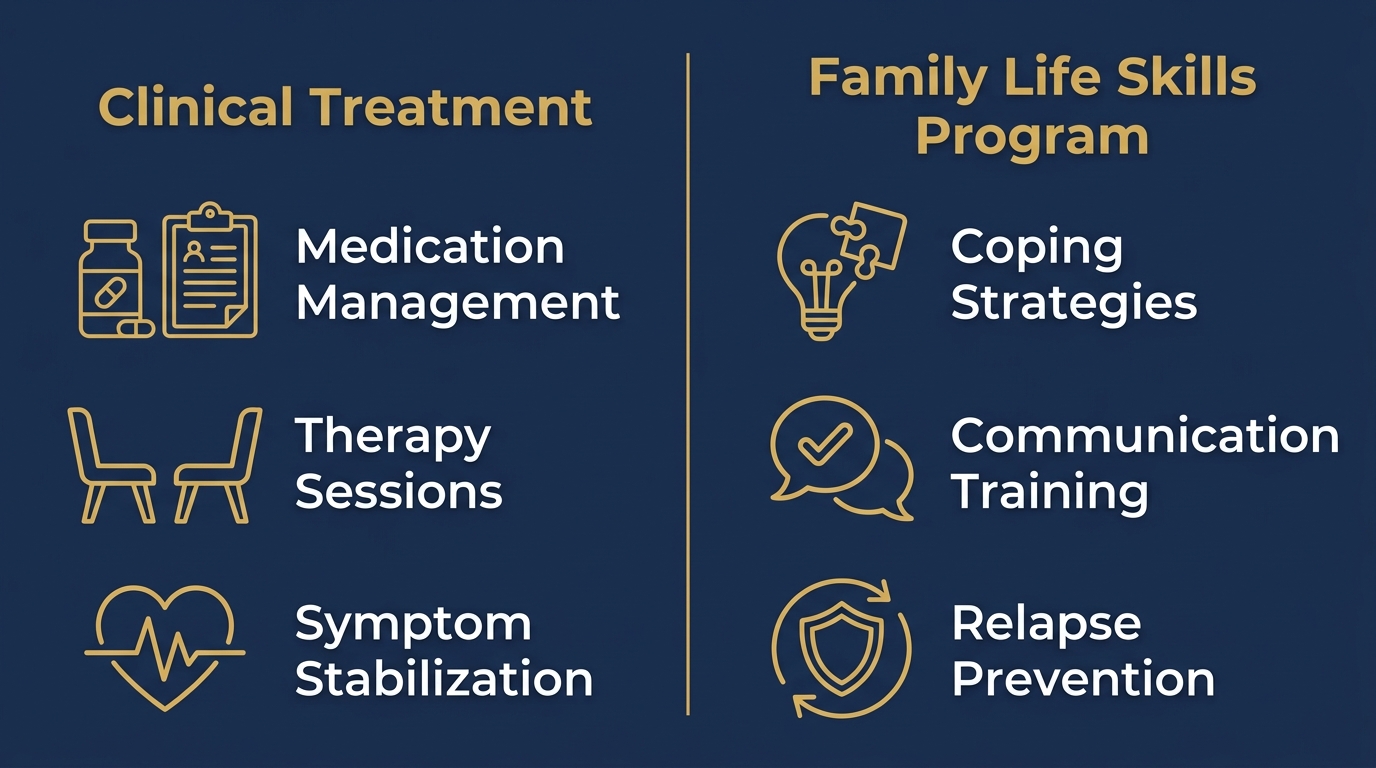
Understanding this complementary dynamic, the Substance Abuse and Mental Health Services Administration (SAMHSA) notes that integrated approaches combining clinical treatment with psychosocial skill-building are considered best practice. This evidence-based perspective reinforces the value of pairing professional therapy and medication with structured, recovery-oriented family skills programmes. In Bangalore, where clinical resources are accessible, family life skills programs like those at ēdge Recovery Life Skills help bridge the gap between treatment and lasting change. The following sections explore how these programs are structured. Results may vary based on individual circumstances; this information is not a substitute for professional medical advice.
Program Structure and Access: What to Expect from Recovery Life Skills Services in Bangalore
Building on the overview, here is what you can expect from the program structure and access process. The family recovery & life skills program in Bangalore is a structured outpatient service that provides individuals and their families with practical, evidence-informed tools to navigate recovery. Rooted in the ASAM Criteria, this recovery and life skills program emphasizes the development of everyday skills that strengthen communication, stress management, and relapse prevention.
The program typically spans 8 to 12 weeks, with participants attending 3 to 4 sessions each week. Sessions take place in a supportive, non-residential setting in Bangalore, allowing you to integrate new skills into your daily life without requiring a residential stay. Each week combines group workshops with one-on-one coaching, and sessions are designed to fit around work or family commitments, with morning and evening options available.
Core components of the life skills program for families address key areas essential for recovery:
- Communication skills: improving how you express yourself and listen to others to reduce conflicts.
- Stress management: learning practical techniques to handle everyday pressures without turning to unhealthy coping mechanisms.
- Coping strategies: building resilience to manage cravings and navigate high-risk situations.
- Relapse prevention planning: creating personalized plans that identify triggers and outline proactive steps.
- Family dynamics education: helping loved ones understand addiction and rebuild healthier, more supportive relationships.
Each of these areas is designed to support the family recovery & life skills program’s goal of empowering both individuals and their support networks.
Access to the program begins with a confidential initial assessment conducted by qualified professionals. This assessment is guided by the American Society of Addiction Medicine (ASAM) Criteria, which helps determine the appropriate level of care and ensures that the services are matched to your unique needs. Based on the results, you receive a personalized plan that maps out your journey through the life skills curriculum, with periodic reviews to adjust goals as you progress.
Family members are encouraged to take part in designated sessions, as their involvement can strengthen the home support system and improve recovery outcomes. This family-oriented approach fosters an environment where open dialogue and mutual understanding can thrive, helping to sustain progress beyond the structured sessions.
With this structure in mind, the next section will explore the specific benefits participants often experience. It is important to remember that this information is not a substitute for professional medical advice; consult a qualified healthcare provider for diagnosis and treatment.
Moving Forward with Family Recovery and Life Skills Support in Bangalore
Moving forward, families in Bangalore can take the next step by engaging in a family recovery & life skills program. Recovery is a shared journey that requires patience, education, and practical skill-building. Addressing substance use and mental health challenges together strengthens the foundation for lasting change.
Enrolling in pre-treatment family empowerment training equips your family with essential coping strategies before the recovery process begins. The Substance Abuse and Mental Health Services Administration (SAMHSA) recognizes that family involvement is critical for lasting outcomes. For families in Bangalore, this family-centered recovery and life skills approach offers structured support during a crucial recovery phase.
To begin your family recovery journey in Bangalore, contact ēdge Recovery Life Skills at (512) 555-0199 or contact@edgelifeskills.com. Results may vary based on individual circumstances. This information is not a substitute for professional medical advice; consult a qualified healthcare provider. If you are in crisis or at immediate risk, call emergency services or a national crisis/overdose helpline.