
Table of Contents
Pre-Treatment Family Empowerment: Why It Matters
When a loved one struggles with substance use, you may feel helpless and unsure how to move forward. Pre-treatment family empowerment training offers a structured way to educate and equip you–the family member–with knowledge and practical skills before the individual begins a formal treatment program. This process helps you understand addiction as a treatable medical condition, build confidence in your ability to provide meaningful support, and reduce the risk of inadvertently reinforcing harmful behaviors.
Evidence from the Substance Abuse and Mental Health Services Administration (SAMHSA) shows that family-based approaches significantly improve engagement and motivation to seek help. By addressing common barriers early–such as denial, fear, or misinformation–you can help your loved one move from ambivalence toward a willingness to enter care. Learning the difference between enabling and supporting behavior is a core part of family intervention strategies. The Hazelden Betty Ford Foundation emphasizes that enabling actions, like covering up consequences or providing financial support that sustains use, often delay recovery, while supportive behaviors–such as expressing concern without blame and maintaining healthy boundaries–encourage treatment entry.
Empowerment also includes setting clear boundaries, prioritizing your own self-care, and seeking education on the recovery process. As you apply these principles, you model the stability and resilience that can inspire change. In the next section, we’ll look at specific steps you can take to strengthen your role during this critical pre-treatment window.
This information is not a substitute for professional medical advice; consult a qualified healthcare provider for diagnosis and treatment. Results may vary based on individual circumstances. If you are in crisis or at immediate risk, call emergency services or a national crisis helpline.
Understanding the Foundations of Pre-Treatment Family Empowerment
When a family member begins the journey towards recovery, the pre-treatment phase can shape the entire path ahead. Pre-treatment family empowerment training–a structured, compassionate programme–equips relatives with knowledge and practical skills. Building on earlier discussions about family involvement, this section explores foundational concepts that help families shift from anxiety to informed support.
What Pre-Treatment Family Empowerment Training Includes
Pre-treatment family empowerment training provides a collaborative framework for understanding addiction as a chronic health condition. Core modules typically include:
- Understanding addiction: exploring the medical and psychological drivers of dependence.
- Communication strategies: using active listening, “I” statements, and non-accusatory dialogue to reduce defensiveness.
- Setting healthy boundaries: distinguishing between helping and rescuing, and establishing firm yet caring limits that encourage responsibility.
- Crisis planning and family intervention strategies: preparing for emergencies and mapping out supportive conversations that guide the person toward treatment.
These modules are often delivered through facilitated group sessions, allowing families to practise skills in a supportive setting. The training encourages families to view themselves as partners in the recovery process, not as fixers. By mastering these elements, families in Bangalore gain clarity and confidence, creating a more stable environment before formal treatment begins.
The Importance of Family Involvement Before Treatment Begins
Actively involving family members before formal treatment commences has a measurable impact on readiness and engagement. Research consistently shows that individuals are more likely to complete intake assessments and engage in therapy when their families are actively involved in the preparation phase. According to federal guidelines from the Substance Abuse and Mental Health Services Administration (SAMHSA), early family empowerment can strengthen motivation and reduce initial resistance. When relatives participate in pre-treatment family empowerment training, they learn to replace reactive responses–such as anger or silent withdrawal–with informed, calm interactions that foster trust. This shift can help the individual feel less isolated and more hopeful, improving the willingness to explore treatment options. In Bangalore, where professional support networks may be limited, proactive family engagement is especially critical, bridging gaps in formal care and building a compassionate safety net around the person. Ultimately, early involvement creates a supportive network that complements the professional care to come, setting a positive tone for the entire recovery journey.
Distinguishing Enabling from Supportive Behavior in Addiction
One of the most critical lessons families learn is the distinction between enabling and supporting behaviour. As NAADAC, the Association for Addiction Professionals, emphasises, helping that shields the individual from natural consequences–such as providing money for substances, making excuses for absences, or minimising the severity of the problem–undermines recovery. For example, paying an overdue bill after a loved one spent money on drugs removes the immediate stress but also eliminates a crucial learning moment. Supportive behaviour, conversely, upholds dignity while encouraging change: listening without judgment, offering transport to treatment sessions, and consistently reinforcing boundaries. A supportive alternative to paying the bill might be sitting together to explore budgeting options or connecting the person to a financial counsellor.
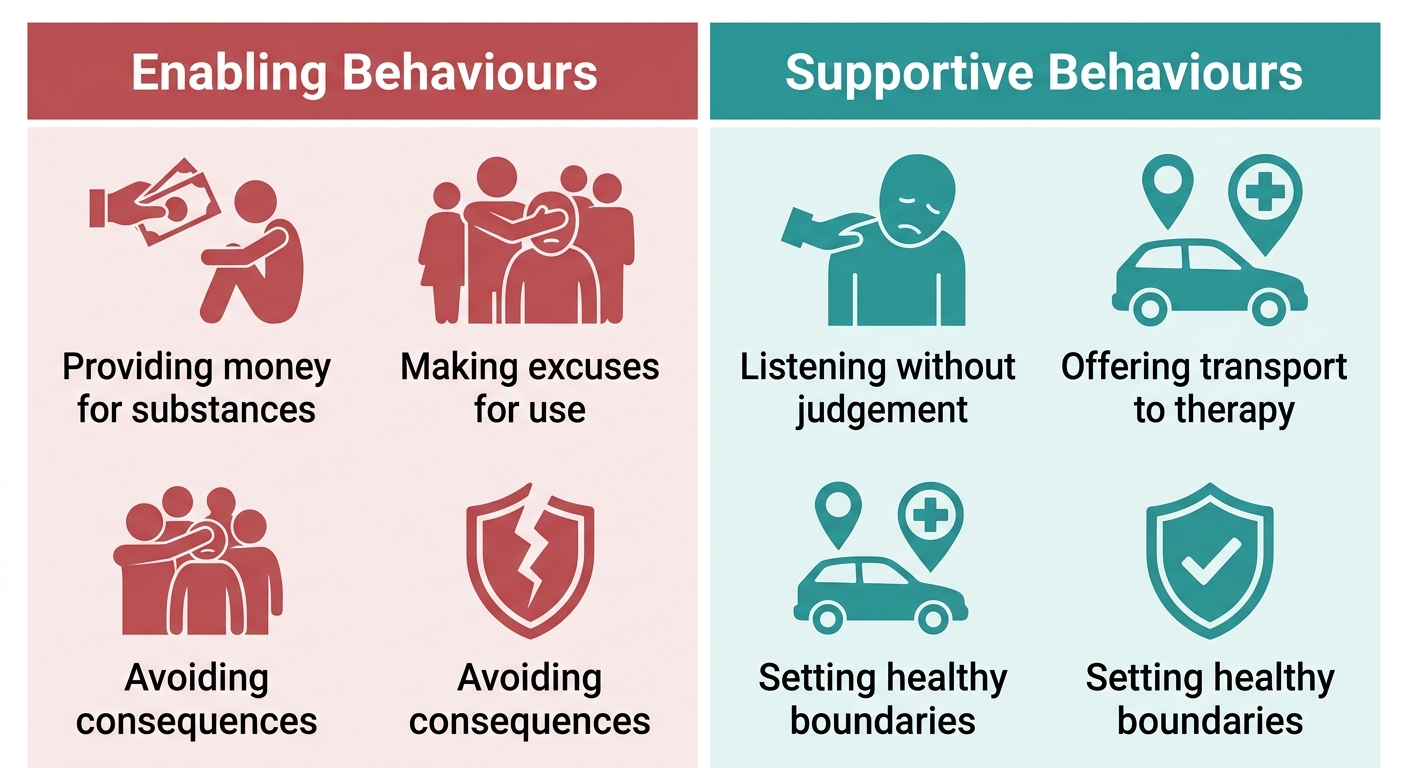
Understanding the distinction between enabling vs supporting behaviour is central to pre-treatment family empowerment training. When families replace enabling habits with these supportive strategies, they become powerful allies in the recovery process.
With these foundational insights, families are ready to move towards structured skill-building. The next section details the pre-treatment family empowerment training process and what families in Bangalore can anticipate.
This information is not a substitute for professional medical advice; consult a qualified healthcare provider for diagnosis and treatment. If you are in crisis or at immediate risk, call emergency services or a national crisis/overdose helpline.
Key Benefits of Pre-Treatment Family Empowerment
Pre-treatment family empowerment training equips families with the skills and knowledge to support their loved one’s recovery journey before formal treatment begins. This proactive approach builds emotional readiness, reduces relapse risk, and helps families replace reactive patterns with constructive support.
How Family Training Strengthens Preparation for Recovery
When your family engages in pre-treatment training, you learn to communicate openly without blame, set healthy boundaries, and manage expectations realistically. These skills reduce the confusion and conflict that often accompany a loved one’s entry into treatment, allowing everyone to focus on healing rather than crisis management. Family empowerment coaching provides practical tools–such as role-playing difficult conversations and creating a family contract–that translate emotional goodwill into consistent, supportive action. You and your family will practice techniques for expressing concerns without accusations, setting limits on financial or emotional enmeshment, and developing a shared plan for the treatment phase. This preparation helps family members understand that recovery is a process–not an event–so they can offer patience instead of pressure, ultimately becoming a stabilizing force during the critical early phase of recovery.
Preventing Relapse Through Early Family Engagement
Research from the Hazelden Betty Ford Foundation indicates that early family engagement is associated with significantly lower relapse rates. When families participate in education and skill-building before treatment begins, they are better equipped to reinforce the recovery habits their loved one will develop during formal care. NAADAC, the Association for Addiction Professionals, underscores the importance of structured family coaching as a best practice for preventing the cycle of relapse. By addressing enabling behaviors and communication breakdowns early, families create a home environment that supports long-term sobriety. This evidence-backed approach demonstrates that families who learn to respond constructively to setbacks–rather than react with blame–can help sustain motivation and accountability in the months following treatment. Moreover, early engagement helps families reduce feelings of isolation and shame that often accompany addiction, fostering a healthier emotional climate before the demands of treatment intensify. Pre-treatment family training introduces coping strategies that the entire household can use, which minimizes the shock of the treatment transition and builds a foundation of mutual understanding.
Recognizing When Your Family Needs Empowerment Coaching
Many families struggle to identify when their well-intentioned support has crossed into enabling. Enabling behaviors–such as covering up for a loved one’s substance use, making excuses for their actions, or repeatedly rescuing them from consequences–can unintentionally reinforce the addictive cycle. Recognizing these patterns is the first step toward change.
Common signs your family may benefit from empowerment coaching include:
- Constant arguments that never resolve the core issue of substance use.
- A pattern of crises followed by brief calm periods without any real change.
- Family members assuming responsibilities the loved one should handle themselves.
- Feeling exhausted, resentful, or hopeless about the situation.
Understanding the difference between enabling and supporting behavior helps families shift from reactive to proactive support. Family intervention strategies taught in coaching encourage healthy accountability while preserving the relationship.
Keep in mind that results may vary based on individual circumstances. This information is not a substitute for professional medical advice; consult a qualified healthcare provider for diagnosis and treatment. If you or a loved one is in crisis, call emergency services or a national crisis/overdose helpline immediately.
How Pre-Treatment Family Empowerment Training Works
Building on the recognition that families play a vital role in recovery, pre-treatment family empowerment training offers a structured program that equips relatives with the communication and motivational skills needed to encourage a loved one to enter addiction treatment. Rather than relying on confrontation, these approaches draw from decades of clinical research to foster collaboration and reduce resistance. In the Indian context, where family ties are especially close, such training can transform concern into a constructive, non-judgmental pathway toward help.
Effective Family Intervention Strategies for Addiction
Evidence-based family intervention strategies have shifted away from hostile confrontations toward compassionate engagement. Three approaches stand out:
- Community Reinforcement and Family Training (CRAFT): This non-confrontational method teaches family members to reinforce healthy behaviors and disengage from substance-related patterns. It replaces enabling with positive reinforcement.
- Systemic Family Therapy: Rooted in the understanding that addiction affects the entire family system, this therapy restructures communication to support recovery rather than maintain dysfunction.
- ARISE (A Relational Intervention Sequence for Engagement): ARISE begins with an invitational family meeting that respects the individual’s autonomy and gradually escalates to a structured intervention only if needed.
According to the Substance Abuse and Mental Health Services Administration (SAMHSA), family engagement works best when it is collaborative and non-confrontational. The Hazelden Betty Ford Foundation notes that CRAFT, in particular, turns family concern into actionable, non-defensive steps.
Planning and Preparing for Family Interventions in India
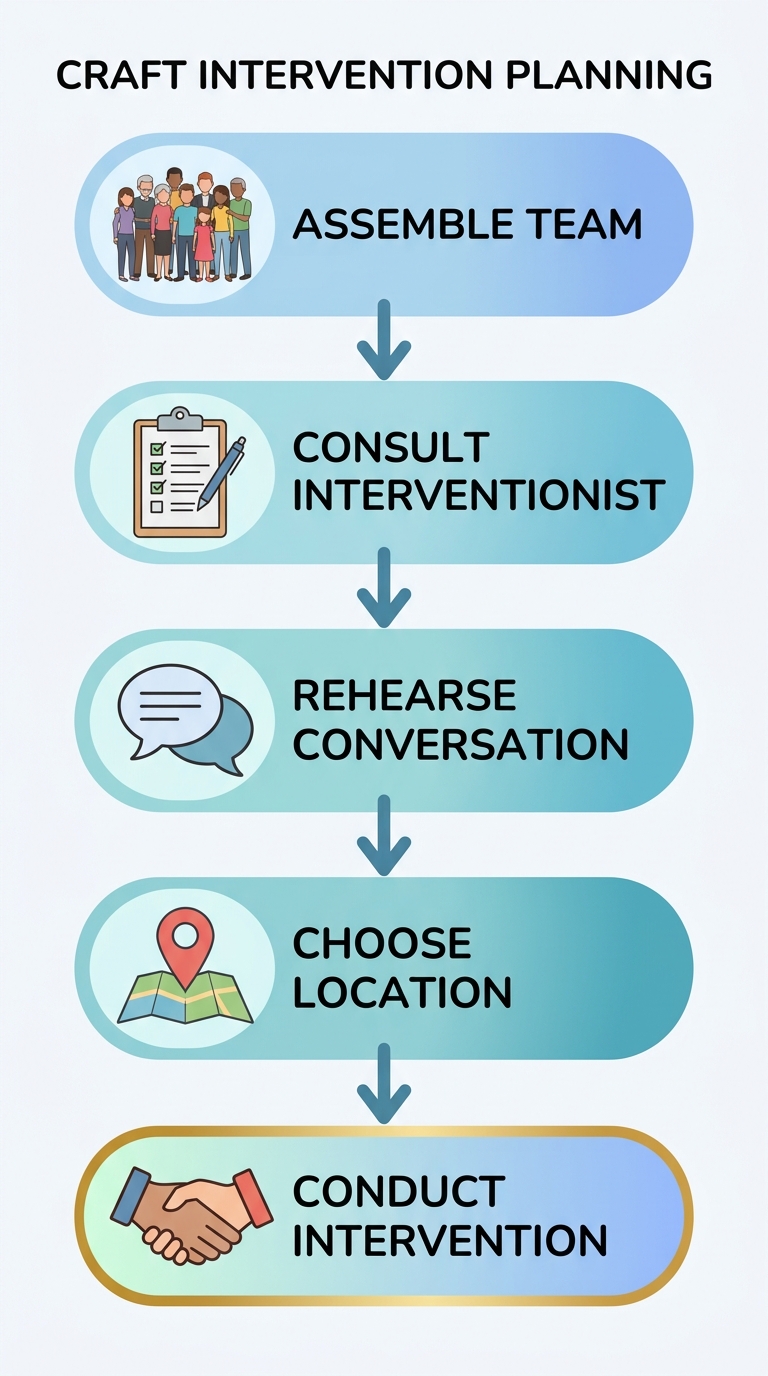
Once a family chooses an evidence-based approach, planning a family intervention in India becomes a structured effort. The following steps help ensure a respectful and effective process:
- Assemble a Support Team: Gather close family members and trusted friends who can speak calmly. In Bangalore’s joint family setups, involve a respected elder to add authority without dominance.
- Consult a Trained Interventionist: NAADAC, the Association for Addiction Professionals, recommends a certified professional who can navigate intense emotions and cultural nuances.
- Rehearse the Conversation: Prepare non-blaming statements and role-play potential reactions.
- Choose a Neutral, Private Location: Select a comfortable, private space–a relative’s home or a community hall–to respect privacy and cultural norms.
A critical distinction lies in enabling vs supporting behavior. Enabling, like paying for substances or hiding mistakes, shields the individual from consequences, while supporting behavior, such as providing transportation to therapy, encourages recovery-oriented choices.
Understanding the Success Rates of Family-Led Interventions
When families commit to pre-treatment family empowerment training, they often ask about outcomes. The Hazelden Betty Ford Foundation reports that CRAFT-based family-led interventions achieve engagement rates of 50 to 85 percent. Success varies with addiction severity, family consistency, and professional support. SAMHSA notes that family involvement is a powerful catalyst but does not guarantee treatment entry.
Families in Bangalore should maintain realistic expectations and consult local addiction professionals. Pre-treatment training fosters a compassionate environment that encourages a loved one to consider treatment, but recovery remains a personal journey. Results may vary based on individual circumstances. This information is not a substitute for professional medical advice. If you are in crisis, call emergency services or a national crisis helpline.
Best Practices for Effective Family Empowerment Training
Pre-treatment family empowerment training equips families to shift from reactive caregiving to intentional, recovery-aligned support. The earlier your family adopts these practices–long before formal treatment begins–the more stable the foundation for lasting change. Understanding the difference between enabling and empowering is central to this learning, as many well-intentioned actions can inadvertently stall progress. By examining the dynamics of family intervention strategies, you gain the insight needed to foster independence without creating distance.
How Enabling Hinders Recovery and What to Do Instead
Enabling behaviors, while often rooted in love, remove natural consequences and reduce the urgency for change. Covering up mistakes, making excuses, or taking over responsibilities can send the message that harmful patterns are tolerable. NAADAC’s guidelines on family involvement in addiction treatment emphasize that enabling undermines the motivation for personal accountability, which is critical for recovery. In contrast, empowering actions uphold boundaries while offering emotional support.
When you replace enabling with empowering responses, you reinforce the internal motivation a loved one needs to seek help. This shift does not mean withdrawing affection; it means replacing rescue with respect for their capability. For example, allowing your loved one to experience the outcome of a missed commitment–rather than fixing it for them–can be a turning point in pre-treatment family coaching. Recognizing the distinction between enabling vs supporting behavior lets you preserve connection without sacrificing accountability.
Stopping Enabling Without Withdrawing Support
Stopping enabling does not require stepping away from the relationship. Instead, you redirect your energy into actions that uphold dignity and promote self-sufficiency. Consider these actionable strategies drawn from family empowerment training:
- Set clear, consistent expectations and communicate them calmly without threats or ultimatums.
- Practice balanced listening–acknowledge feelings while refraining from solving every problem.
- Redirect “fix-it” urges by asking, “What do you think your next step should be?”
- Model healthy coping by managing your own stress openly, showing that recovery is a shared journey.
- Seek your own education through family intervention strategies to strengthen your role as a steady ally.
By aligning your behaviors with these principles, you maintain a supportive presence while allowing your loved one to build the problem-solving skills essential for sustained change.
Integrating ēdge Recovery Life Skills Coaching for Sustained Change
Structured support beyond the family unit accelerates the shift from intent to daily practice. ēdge Recovery Life Skills in Bangalore provides individualized coaching that translates therapeutic goals into practical routines, helping your loved one handle triggers, manage time, and rebuild confidence. These sessions complement the empowerment work you do at home by reinforcing the skills that prevent relapse and support independent living.
Pre-treatment family coaching integrated with ēdge Recovery’s modular curricula offers a consistent framework for your loved one to practice new behaviors. Through short online lessons and one-on-one coaching, clients learn to navigate real-life scenarios while your family receives guidance on how to respond constructively. The collaboration between your household and these structured programs creates a safety net that is both accountable and compassionate.
For families in Bangalore ready to move beyond crisis management, exploring structured coaching options is a logical next step. The strategies outlined here form a base for long-term well-being; the following section will walk you through the concrete actions you can take today to begin this journey. Remember that results vary based on individual circumstances, and this information is not a substitute for professional medical advice.
Sustaining Empowerment: Your Family’s Path to Recovery
Sustaining the progress gained through pre-treatment family empowerment training requires ongoing commitment, practice, and adaptation. The skills families develop early in the recovery journey–open communication, boundary-setting, and collaborative problem-solving–become the foundation for navigating the months and years ahead. Recovery is a journey, not a destination, and family empowerment is an ongoing practice rather than a one-time achievement.
Understanding the difference between supporting and enabling behaviors in recovery is essential for long-term success. Supporting a loved one means allowing natural consequences to occur while maintaining a caring presence–for example, refusing to cover missed work shifts while offering to help them find a sponsor. Enabling, by contrast, involves shielding someone from the discomfort that motivates change, such as paying bills they neglected or making excuses to employers. In family intervention strategies, learning to recognize these distinctions takes time and often benefits from professional guidance. According to the Substance Abuse and Mental Health Services Administration (SAMHSA), families who access community resources such as Al-Anon or Nar-Anon report feeling more equipped to maintain healthy boundaries and prioritize their own self-care. These support networks provide ongoing education and peer connection that reinforce the principles families began practicing before treatment started.
Empowerment deepens when families embrace that they cannot control outcomes, only their own responses and choices. Seeking support for yourself is not a sign of weakness–it models the same willingness to grow that you hope to see in your loved one. Results may vary based on individual circumstances; this information is not a substitute for professional medical advice; if you are in crisis, call emergency services.