
Table of Contents
Comprehensive Personal Development in Bangalore, India: Building Recovery Beyond Abstinence
Comprehensive personal development moves beyond simple abstinence to foster lifelong, holistic growth encompassing emotional, social, and psychological well-being. According to the Substance Abuse and Mental Health Services Administration (SAMHSA), recovery involves health, home, purpose, and community dimensions–each strengthened by personal development skills. For individuals in Bangalore, where fast-paced lifestyles and high stress levels intersect with a growing mental health awareness, building relapse prevention strategies and emotional regulation techniques can support sustained sobriety. This information is not a substitute for professional medical advice; consult a qualified healthcare provider for diagnosis and treatment. Results may vary based on individual circumstances. If you are in crisis or at immediate risk, call emergency services or a national crisis/overdose helpline. One core component of this personal development journey is learning specific relapse prevention strategies.
1. Lasting Recovery Through Holistic Growth
Holistic growth in recovery is a multidimensional approach that addresses physical, emotional, mental, and social well-being simultaneously. The Substance Abuse and Mental Health Services Administration (SAMHSA) describes recovery as a process of change toward improved health, self-direction, and full potential. At ēdge Recovery Life Skills, this comprehensive personal development model informs our coaching and skill-building programs.
For the emotional dimension, emotional regulation techniques offer concrete ways to manage stress, anxiety, and overwhelming feelings that often accompany early recovery. The mental and behavioral dimension hinges on relapse prevention strategies, which teach individuals to spot triggers, develop coping responses, and cultivate resilience. Socially, restoring healthy relationships and contributing to community provides essential accountability and purpose. SAMHSA’s recovery dimensions — health, home, purpose, and community — highlight that lasting change depends on growth across these interconnected life areas.
Together, these elements create a foundation that can support sustained wellness without guaranteeing specific results. Building on this holistic outlook, the next sections detail actionable techniques for relapse prevention and emotional regulation.
2. Essential Life Skills for Everyday Independence
To achieve everyday independence, individuals need to cultivate certain essential life skills. A comprehensive personal development approach helps people manage daily tasks, build relationships, and support their recovery journey. Key skills include time management, basic financial literacy, and effective communication. Each contributes to greater self-reliance and smoother navigation of life’s demands.
Emotional regulation techniques enable individuals to recognize and manage stress, reducing the risk of relapse. Simple coping strategies, like using a daily planner or practising mindful breathing, can provide structure and calm in challenging moments. Integrating relapse prevention strategies into daily routines, such as self-monitoring and seeking support, further strengthens stability.
These skills are reinforced through structured programs that offer guidance without promising specific outcomes. According to the Substance Abuse and Mental Health Services Administration (SAMHSA), evidence-based frameworks support the development of such life skills for long-term independence. Mastering these skills lays the foundation for more advanced strategies discussed in the following section. Results may vary based on individual circumstances.
3. Coaching versus Clinical Therapy in Recovery
Recovery coaching supports comprehensive personal development by helping clients set and pursue present-moment goals, build accountability, and develop practical life skills–without diagnosing or treating mental health conditions. Coaches act as guides, not therapists, and focus on forward-looking strategies rather than processing past trauma.
In contrast, clinical therapy is delivered by licensed professionals who diagnose and treat mental health disorders, often addressing past trauma or clinical diagnoses. The Substance Abuse and Mental Health Services Administration (SAMHSA) distinguishes clinical treatment from non-clinical recovery support, which includes coaching, within a broad recovery framework.
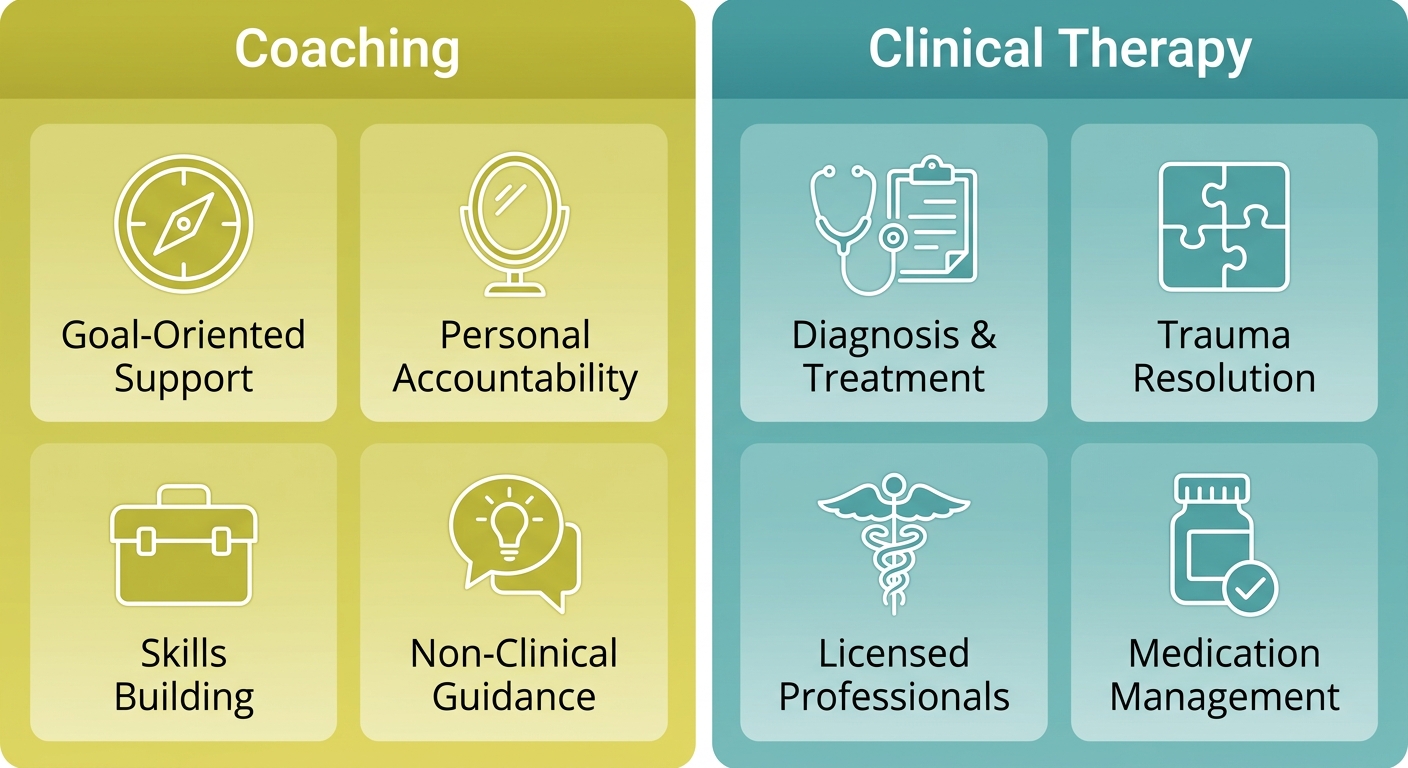
While coaching emphasizes forward progress, clinical therapy tackles underlying conditions–both can be valuable in a comprehensive recovery plan. Coaches often help clients implement relapse prevention strategies, such as building structured routines and tracking triggers, while also teaching emotional regulation techniques like grounding exercises and mindfulness. These complementary approaches mean many individuals benefit from using both services simultaneously, as they address different layers of recovery. This information is not a substitute for professional medical advice; consult a qualified healthcare provider for diagnosis and treatment.
4. Rebuilding Career and Daily Routines After Treatment
After completing a treatment program, the next critical step is rebuilding your daily life and career through a comprehensive personal development approach. Establishing a structured routine–consistent wake-up, meals, activities, and sleep–provides the stability needed for sustained recovery. A gradual return to work or vocational training, starting with part-time or low-stress roles, allows you to rebuild confidence without overwhelming pressure. Practicing emotional regulation techniques such as mindfulness, journaling, and breathing exercises can calm the mind and reduce cravings. Integrating relapse prevention strategies, like identifying personal triggers, scheduling regular check-ins, and building a support network that includes local groups in Bangalore, is essential for maintaining progress. Set realistic career goals with incremental milestones; progress is gradual. For evidence-based guidance, the Substance Abuse and Mental Health Services Administration (SAMHSA) offers reliable recovery support resources. Remember, recovery is a gradual journey; each positive step strengthens your foundation. Results may vary based on individual circumstances. This information is not a substitute for professional medical advice; consult a qualified healthcare provider for diagnosis and treatment.
5. Relapse Prevention Strategies Rooted in Personal Development
Building on earlier skills, a comprehensive personal development plan can prevent relapse.
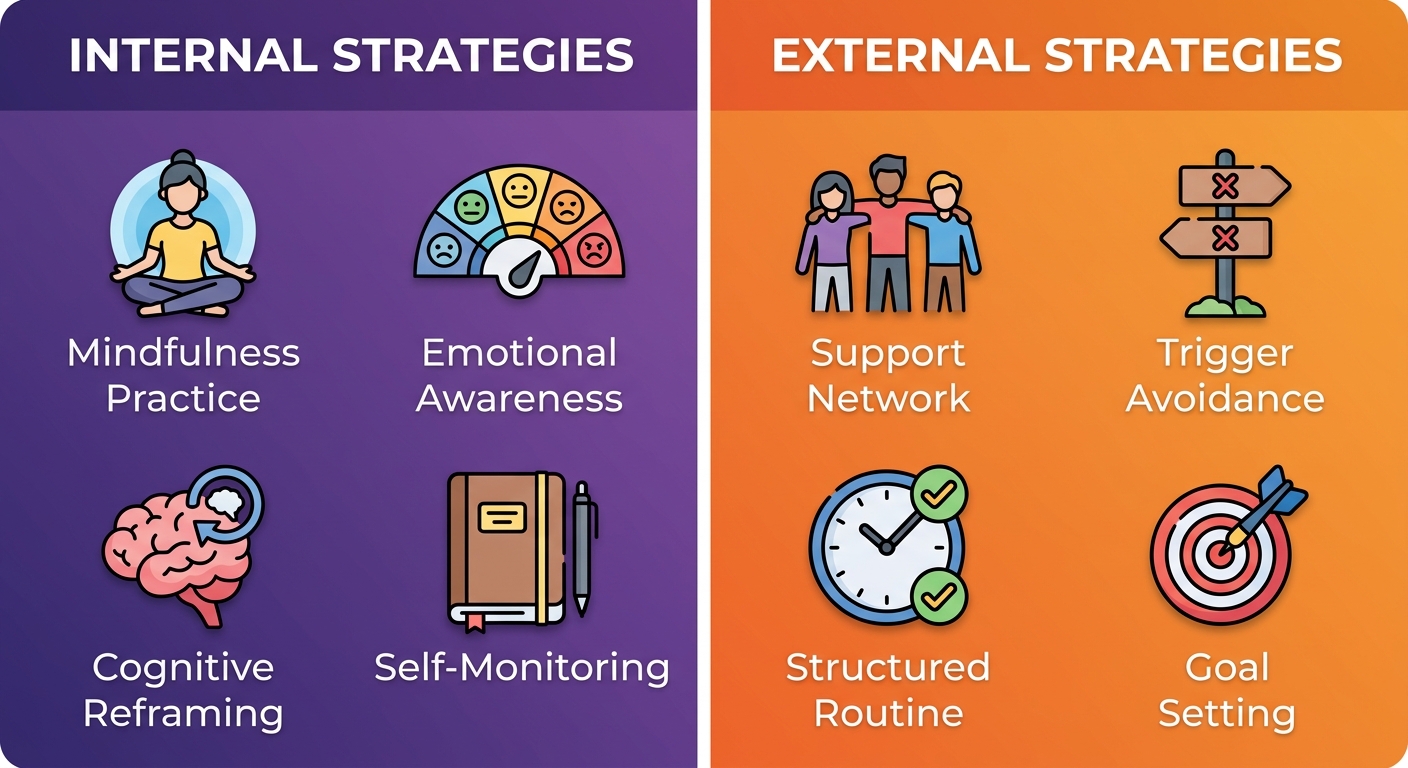
Using emotional regulation techniques like the five-minute “pause and label” exercise can help you manage cravings. When a strong urge arises, stop, identify the driving emotion, and then respond with a planned coping behavior such as calling a supporter or walking outside. Over time, this technique retrains your brain to respond thoughtfully rather than react impulsively. Setting a SMART personal development goal each week–for instance, attending three mutual-support meetings and logging daily triggers–builds proactive habits. Building a support network through pre-treatment family empowerment training can reinforce accountability and emotional safety. Regular practice of these relational skills fosters self-awareness and confidence to face high-risk situations without turning to substances. These practical efforts, as part of relapse prevention strategies, strengthen your ability to manage high-risk situations. Results may vary based on individual circumstances. This information is not a substitute for professional medical advice; consult a qualified healthcare provider for diagnosis and treatment.
6. Emotional Regulation Techniques for Resilience
Building on stress management approaches, emotional regulation techniques are practical skills that help individuals respond to intense feelings without turning to harmful patterns. These methods form a cornerstone of comprehensive personal development by strengthening the ability to pause, process, and choose healthier reactions.
Three evidence-based techniques include deep breathing, which calms the nervous system by slowing the heart rate; progressive muscle relaxation, where systematically tensing and releasing muscle groups reduces physical tension tied to emotional distress; and cognitive reappraisal, which involves identifying distressing thoughts and reframing them in a more balanced perspective. According to the Substance Abuse and Mental Health Services Administration (SAMHSA), consistent practice of self-regulation skills builds the emotional foundation needed for sustainable recovery.
When practiced regularly, these strategies reduce the intensity of emotional triggers and reinforce relapse prevention strategies by creating a buffer between impulse and action. Consistency matters more than perfection, and even brief daily practice strengthens resilience over time.
The information on this page is not a substitute for professional medical advice. Consult a qualified healthcare provider for diagnosis and treatment. If you are in crisis, call emergency services or a national crisis helpline such as iCall at 9152987821.
Sustaining Recovery Through Ongoing Personal Development
Sustaining recovery after treatment involves comprehensive personal development, a continuous, non-linear process that individuals in Bangalore commit to daily. According to the Substance Abuse and Mental Health Services Administration (SAMHSA), personal development is a cornerstone of long-term recovery, emphasizing growth and resilience.
Building on that foundation, essential relapse prevention strategies include identifying personal triggers, creating a coping plan, and building a reliable support network. Emotional regulation techniques such as mindfulness meditation and cognitive reframing help manage cravings and reduce stress, strengthening the ability to avoid relapse. This comprehensive personal development is not a one-time fix but an evolving practice that builds self-awareness and emotional resilience. Results may vary based on individual circumstances, and this information is not a substitute for professional medical advice.