
Table of Contents
Understanding Family Codependency Training in Bangalore, Karnataka
For families in Bangalore, understanding the patterns behind codependency is the first step. Family codependency develops when a loved one struggles with substance use, leading to over-involvement, rescuing behaviors, loss of personal identity, and attempts to control the person’s use. Comprehensive family codependency training helps families recognize and shift these patterns within Bangalore’s close family networks.
Enabling behavior in addiction recovery often surfaces as covering for the person, providing money, or absorbing consequences to shield them from hardship. According to the Substance Abuse and Mental Health Services Administration (SAMHSA), reducing these behaviors can support better outcomes while preserving family connection. Recognizing enabling patterns is key, not as blame but as an opportunity to learn healthier ways of supporting.
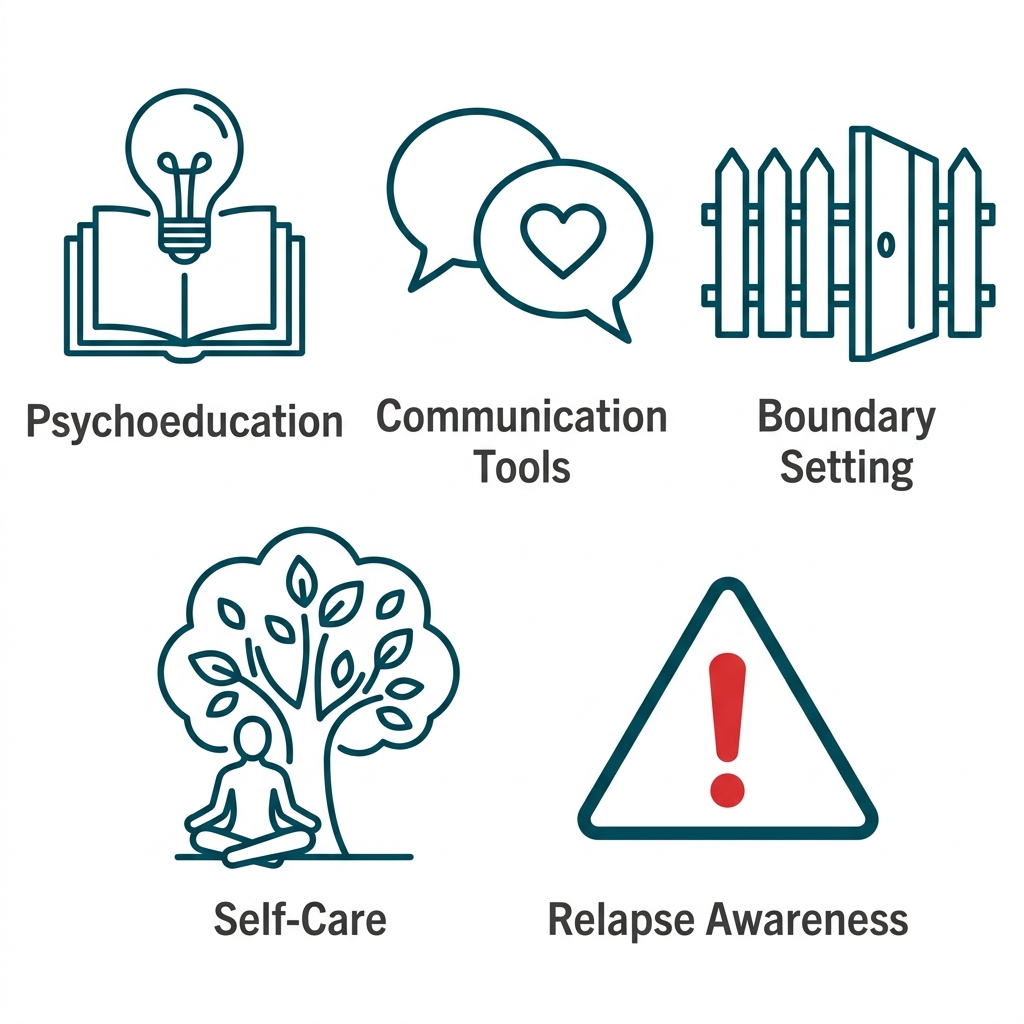
Family codependency training in Bangalore typically includes psychoeducation, communication tools, boundary-setting skills, self-care strategies, and relapse-awareness support. Setting boundaries with an addicted family member is reframed as an act of care rather than rejection–a perspective that resonates strongly within close-knit Indian family structures across Karnataka. Results may vary based on individual circumstances.
Once families understand these patterns, the next question is what training actually involves. For families in the early stages, pre-treatment family empowerment training can help build readiness before formal treatment begins.
At the core of any reputable comprehensive family codependency training in Bangalore are several essential components designed to educate and empower families. Family codependency refers to an over-involvement in an addicted person’s choices and behaviors that unintentionally shields them from the natural consequences of their actions. This training helps family members identify these entrenched patterns and shift toward healthier interactions.
A key focus area is recognizing enabling behavior in addiction recovery — such as making excuses for the individual, covering up relapses, or absorbing financial and emotional fallout. Psychoeducation modules explore addiction as a family-systems issue, detailing relapse warning signs, constructive communication patterns, and self-care strategies for caregivers. Grounded in the ethical practices promoted by NAADAC, the Association for Addiction Professionals, the training emphasizes competency-based education that respects the family’s role in the recovery process.
Practical skill-building for setting boundaries with an addicted family member forms another cornerstone. Participants learn to use I-statements, role-play difficult conversations, and establish clear consequences — then follow through consistently. Taking a strengths-based, skills-forward approach, the program teaches assertive communication, decision-making, and conflict resolution rather than relying on a clinical therapy model.
The following illustration highlights the essential life skills cultivated throughout the program.
In Bangalore, family dynamics are often characterized by close-knit extended family structures, with multiple generations living under one roof. These cultural patterns can amplify codependent behaviors, making locally adapted training essential. Facilitators address how traditional role expectations may unintentionally encourage enabling and place a strong emphasis on self-care for the primary caregiver, who frequently carries an unequal share of responsibility.
A comprehensive family codependency training in Bangalore typically covers modules such as:
- Psychoeducation on addiction and the family system
- Communication and listening tools
- Boundary-setting practice with real-life scenarios
- Self-care and burnout prevention
- Relapse awareness and coordinated response
These components are often woven into a broader comprehensive personal development approach for families in Bangalore, integrating life skills that extend beyond codependency. While the training offers valuable support, results may vary based on individual circumstances; this information is educational and not a substitute for professional medical advice.
Transforming Family Dynamics Through Codependency Training in Bangalore
When addiction enters a household, the entire family system can become destabilized by confusion, blame, and unspoken pain. Families across Bangalore are turning to comprehensive family codependency training to replace instability with structure and fear with practical skills. This transformative approach teaches relatives to step out of reactive roles and into intentional patterns of communication, boundary-setting, and supportive action–shifting the family from merely surviving to actively healing together.
The Role of Communication in Recovery Dynamics
Families living with addiction often fall into cycles of accusation, silence, or explosive arguments that leave wounds unaddressed. Structured skills training for families introduces active listening as a foundational practice–teaching members to hear what a loved one says without immediately formulating a rebuttal or launching into blame. Paired with non-blaming language, this skill reshapes how families discuss difficult topics.
Rather than stating “You are destroying this family,” a spouse or parent learns to say “I feel worried when you come home intoxicated.” This reframe, practiced through “I” statements in codependency coaching sessions, diffuses defensiveness and opens space for honest dialogue. In a Bangalore household where tensions may have simmered for years, such communication tools reduce the emotional temperature and create conditions where recovery-related conversations can occur without triggering the conflict that previously shut them down.
Building and Maintaining Healthy Boundaries
Setting boundaries with an addicted family member is one of the most challenging yet essential skills taught in family codependency coaching. Training defines three distinct boundary categories and gives participants concrete practice in upholding each one.
Emotional boundaries involve refusing to absorb a relative’s guilt, shame, or anxiety as your own. A Bangalore mother, for example, might learn to stop feeling personally responsible for her adult child’s moods after a relapse. Physical boundaries address caregiving burdens–such as choosing not to be the sole provider of meals, laundry, and daily supervision for a family member who is capable of sharing those responsibilities. Financial boundaries are equally vital: a family might decide to stop funding the consequences of active use, like paying off debts or covering fines, and instead redirect resources toward structured recovery support. These boundary-setting strategies for loved ones create a framework where chaos gives way to predictable expectations and mutual accountability.
Codependency Training vs. Family Therapy: A Comparative Look
Many families in Bangalore wonder whether they need clinical therapy or skills-based support, and the distinction matters. The following table clarifies the different focus and structure of each approach.
| Aspect | Family Therapy | Family Codependency Training |
|---|---|---|
| Primary Focus | Heal emotional wounds, improve family system dynamics | Teach practical skills for daily boundaries, communication, and enabling patterns |
| Typical Provider | Licensed therapist or clinical psychologist | Certified codependency coach or recovery life skills specialist |
| Session Structure | Exploratory, often emotional; may revisit past trauma | Structured, skill-building modules; forward-focused action plans |
| Goal | Emotional healing and relational repair | Empower family members with concrete strategies to support–not enable–recovery |
The Substance Abuse and Mental Health Services Administration (SAMHSA) offers guidance on family involvement in recovery that underscores the value of structured, skills-oriented participation–a conceptual reference point that helps distinguish clinically guided family therapy from the practical, action-focused nature of codependency training. Indian families may lean toward family therapy when unprocessed trauma dominates the household, while codependency training becomes the more fitting choice when the immediate need is for daily coping skills, boundary reinforcement, and predictable household structure. Neither option is superior; they serve different purposes at different stages of the recovery journey.
Addressing Enabling Behaviors in Indian Families
Enabling behavior in addiction recovery often disguises itself as love, duty, or cultural obligation. In Indian multigenerational households, where filial responsibility and financial pooling are deeply ingrained, the line between helping and rescuing can blur easily. A father who repeatedly pays off his son’s drug-related debts, or a sister who calls in sick on her brother’s behalf after a binge, may believe she is being a caring relative when she is actually preventing natural consequences that could motivate change.
Family codependency coaching reframes “helping” from rescuing to supporting. Instead of covering up a relapse, a family might learn to allow an adult child to face the fallout while still expressing love and maintaining the door to treatment. Training in Bangalore explicitly addresses these culturally specific dynamics, guiding families to disentangle care from control and compassion from complicity. Over time, households replace cycles of secrecy and shame with transparent, structured support that serves true recovery rather than sustaining the addiction.
These communication and boundary tools create a foundation for lasting change, but learning them is just the beginning. Understanding how a structured program delivers these skills–and what the enrollment process entails–can help families take the next concrete step toward healing.
Results may vary based on individual circumstances. This information is not a substitute for professional medical advice; consult a qualified healthcare provider for diagnosis and treatment. If you are in crisis or at immediate risk, call emergency services or a national crisis/overdose helpline.
Putting Codependency Training Into Practice for Families in Bangalore
When a spouse struggles with substance use, families in Bangalore often step in to shield them from consequences–paying bills, making excuses, and absorbing stress. Comprehensive familycodependency training shows that these well-intentioned actions can reinforce addiction. Instead, learning to respond with care without control creates the conditions for genuine recovery. This section guides you through practical steps to shift from enabling to supporting, starting with the comparison below.
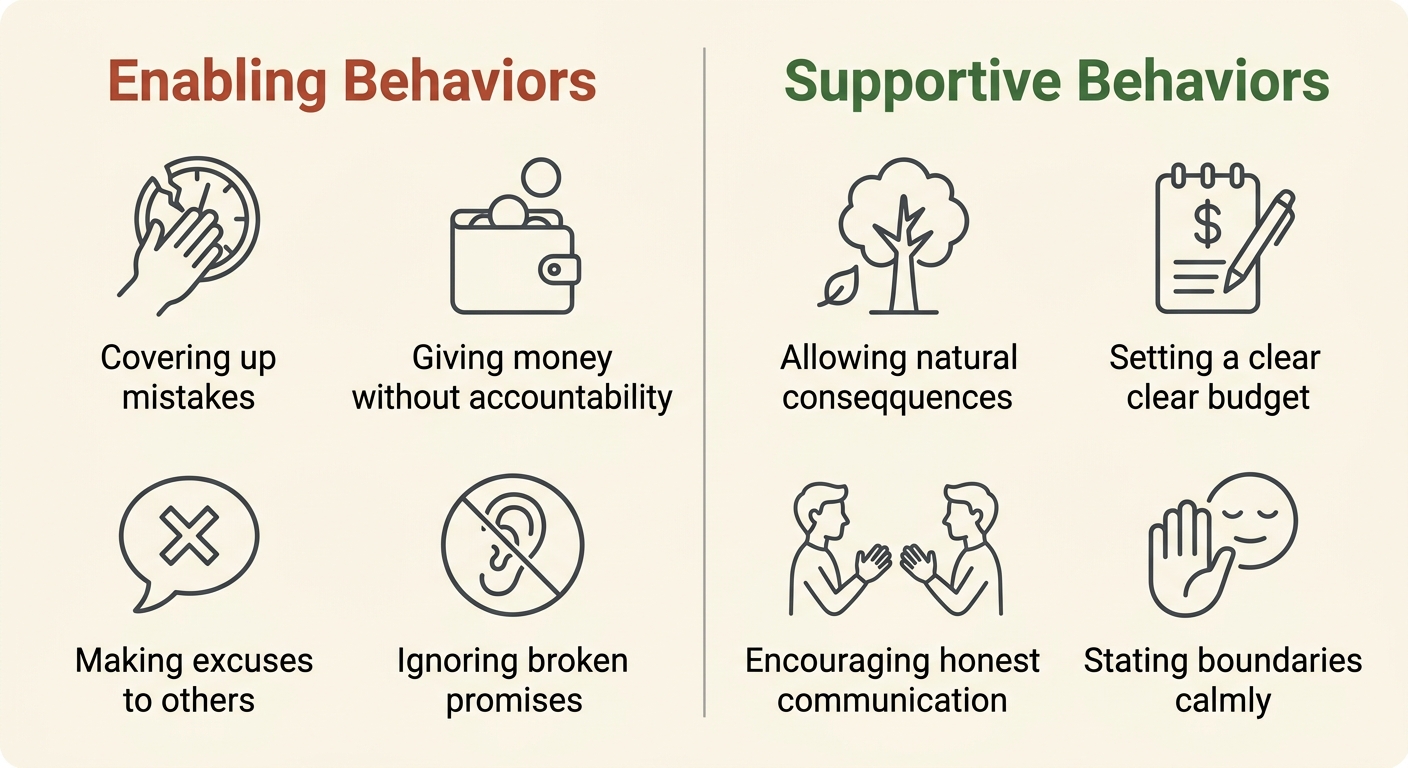
Aligned with NAADAC’s family-oriented recovery principles, the following table highlights common enabling behaviors and their supportive alternatives.
| Enabling Behavior | Supportive Behavior |
|---|---|
| Covering up mistakes or missed work due to substance use | Allowing natural consequences while expressing concern and offering help to find treatment |
| Giving money without accountability | Setting a clear budget and providing funds only for recovery-oriented activities |
| Making excuses to relatives or employers | Encouraging the family member to communicate honestly and take responsibility |
| Ignoring broken promises or aggressive outbursts | Stating boundaries calmly and following through with pre-agreed consequences |
These contrasts are based on NAADAC best practices. Making the shift from enabling to supporting can feel unfamiliar, but consistent practice leads to lasting change. The infographic below offers a quick visual reference.
Practical Steps to Stop Enabling a Spouse’s Addiction
Start by noting when you rescue your spouse from consequences–calling in sick or paying overdue bills. Replace those actions with caring accountability: “I can’t lie for you, but I’ll help you find treatment.” Let natural consequences occur. Comprehensive familycodependency training emphasizes that stepping back isn’t abandonment; it’s making room for real recovery. Over time, these small steps create a healthier dynamic without guilt.
Setting Financial and Physical Boundaries at Home
Separate bank accounts and limit access to joint funds. Do not co-sign loans or cover debts without a recovery-focused agreement. Create a designated calm area–a locked drawer for valuables, a separate sleeping space if needed–especially in a joint family home. Explain these measures as protection, not punishment. Setting boundaries with an addicted family member, informed by NAADAC-based family recovery education, keeps everyone safer while removing enabling incentives.
Saying No Without Guilt: Communication Scripts
Use empathetic scripts:
- “I love you, and I can’t give money that might harm your recovery. Let’s explore other support.”
- “I won’t be dishonest with your employer, but I’ll sit with you during the call.”
These calm statements maintain the relationship while holding limits. Rehearsing them, perhaps in a virtual workshop, reduces guilt. Consistent practice gradually reshapes family interactions toward shared responsibility.
Leveraging Online Workshops for Remote Learning
For families unable to attend in-person sessions, online workshops deliver comprehensive familycodependency training directly. Structured modules cover enabling patterns, boundary scripts, and supportive communication, often with facilitators who understand Bangalore’s cultural context. Participants can join from home, replay lessons, and connect with peers. Virtual coaching adds accountability. This flexibility makes ongoing education accessible for relatives in different cities, strengthening the entire support network even when time is scarce.
The insights shared here are educational and not a substitute for professional medical advice. If you or a loved one is in crisis, please contact a qualified healthcare provider.
Sustaining Long-Term Recovery with Codependency Training in Bangalore
Recovery is rarely linear. For families in Bangalore seeking comprehensive family codependency training, understanding the long arc of recovery matters as much as the initial treatment. According to SAMHSA, the U.S. Substance Abuse and Mental Health Services Administration, recovery is “a process of change through which individuals improve their health and wellness, live a self-directed life, and strive to reach their full potential.” This definition underscores that lasting change depends on ongoing personal and family work, not a single event.
Enabling takes many forms. enabling behavior in addiction recovery can include making excuses for missed treatment appointments, paying the loved one’s rent after a relapse, or lying to other relatives to hide substance use. While these actions often come from a place of care, they shield the person from natural consequences and can inadvertently weaken their motivation to remain in recovery.
Codependency patterns often deepen the challenge. Family members may become over-responsible, constantly monitoring the loved one’s behavior or suppressing their own needs to manage the situation. These patterns can erode the recovering person’s sense of agency and slow their progress. Recognizing these dynamics is a critical first step toward lasting family health.
Setting boundaries builds healthier dynamics. Codependency training focuses on setting boundaries with an addicted family member using practical skills. Participants learn to use “I” statements, schedule calm conversations, and differentiate emotional support from financial or behavioral rescuing. Such clear limits help families offer genuine support without enabling the cycle of use.
Family involvement is culturally significant in Indian households. In Bangalore, where family structures are deeply interwoven with daily life, structured codependency training that emphasizes healthy communication becomes especially relevant. It translates the recovery principles of hope and relational support, as articulated by SAMHSA, into everyday interactions, respecting deep-rooted family values while fostering change.
This training is a complementary support tool, not a substitute for medical, psychiatric, or substance-use treatment. Individual outcomes vary, and no program can guarantee a specific recovery result. If a loved one is in crisis or at immediate risk, contact emergency services or a national crisis/overdose helpline immediately. The information here is not a replacement for professional medical advice.
Families can move from enabling to empowering. By learning to recognize enabling behavior, set limits, and sustain their own well-being, family members become active contributors to the recovery process. Families in Bangalore ready to take this step may explore structured codependency training programs–like those at ēdge Recovery Life Skills–to build healthier communication and lasting family resilience.
Frequently Asked Questions About Family Codependency Training in Bangalore
After exploring enabling patterns, these FAQs explain comprehensive family codependency training in Bangalore–how it helps families shift from enabling to supporting healthy recovery, a principle endorsed by addiction professionals who follow NAADAC standards.
What is family codependency training? Family codependency training teaches loved ones to recognize and change behaviors like excessive caretaking or covering up that unintentionally support addiction. It provides practical strategies without therapy or diagnosis.
Who should attend comprehensive family codependency training in Bangalore? Parents, spouses, adult children, or close relatives. Sessions across Bangalore are available in group, individual, and online formats, in English and Kannada.
What is enabling behavior in addiction recovery? Enabling behavior in addiction recovery includes giving money, making excuses, or shielding a loved one from natural consequences. Recognizing these patterns is the first step toward change.
How do you start setting boundaries with an addicted family member? Setting boundaries with an addicted family member begins with clear, consistent communication–like declining to give money or cover missed work–and sticking to your limits without guilt.
Is this training a substitute for therapy or medical treatment? No. This training is educational, not therapy. It complements professional care; results vary based on individual circumstances. If in crisis, call emergency services or a helpline such as AASRA at 91-9820466726.
Next Steps Toward Healthier Family Relationships in Bangalore
A comprehensive family codependency training program helps Bangalore families turn recognition of codependency into practical, daily actions for rebuilding trust.
- Practice setting boundaries with an addicted family member: write a plan for calm, consistent responses when limits are tested.
- Replace enabling behavior in addiction recovery with supportive actions that do not shield a loved one from natural consequences.
- Seek professional family counseling or a support group in Bangalore.
Results may vary; this information is not a substitute for professional medical advice. In a crisis, call emergency services or a national crisis/overdose helpline.